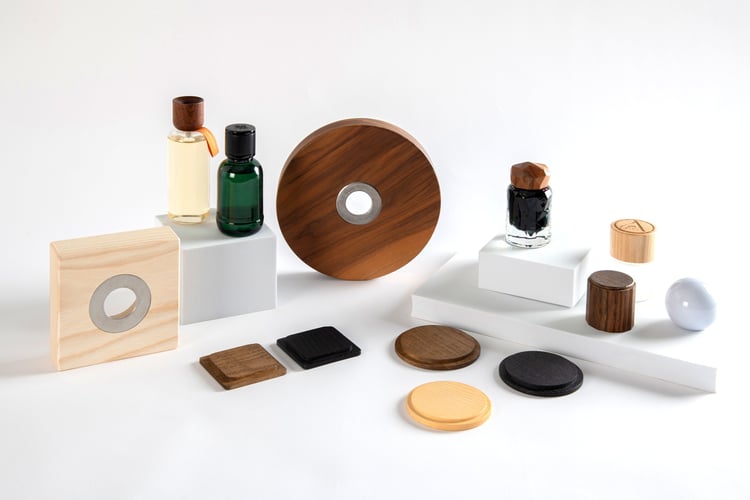
Wood is used in packaging components because it combines properties that few materials offer together: a warm feel in the hand, a natural grain that makes every piece different, machining to tight tolerances and a distinctive look that raises the perceived value of the product. Used correctly, it also meets the safety requirements that cosmetics, fragrance and spirits brands have to document.
At Minelli Group we manufacture wood packaging components in solid wood for cosmetics, fragrance and spirits brands: closures, caps, lids, collars, compacts and boxes. This guide explains the benefits of wood packaging components, from material science to brand perception and safety.
Wood vs plastic and metal: a material that feels warm in the hand
Wood conducts heat poorly, so it draws less heat from the skin than metal or plastic and feels warmer. A study in the Journal of Wood Science compared wood with aluminium and polyethylene: wood was rated significantly warmer than both, whatever the species or the coating, and more comfortable to hold than aluminium. In packaging, the closure is the part the customer touches first, so this difference is felt from the first contact.
A grain that is never the same twice
Every piece of wood has its own grain, so no two components are identical. For a brand, this natural variation is part of the appeal: it reads as authentic and crafted. The finish decides how much of the grain shows, from natural wood to a clear or coloured finish.
Precision that can be designed in
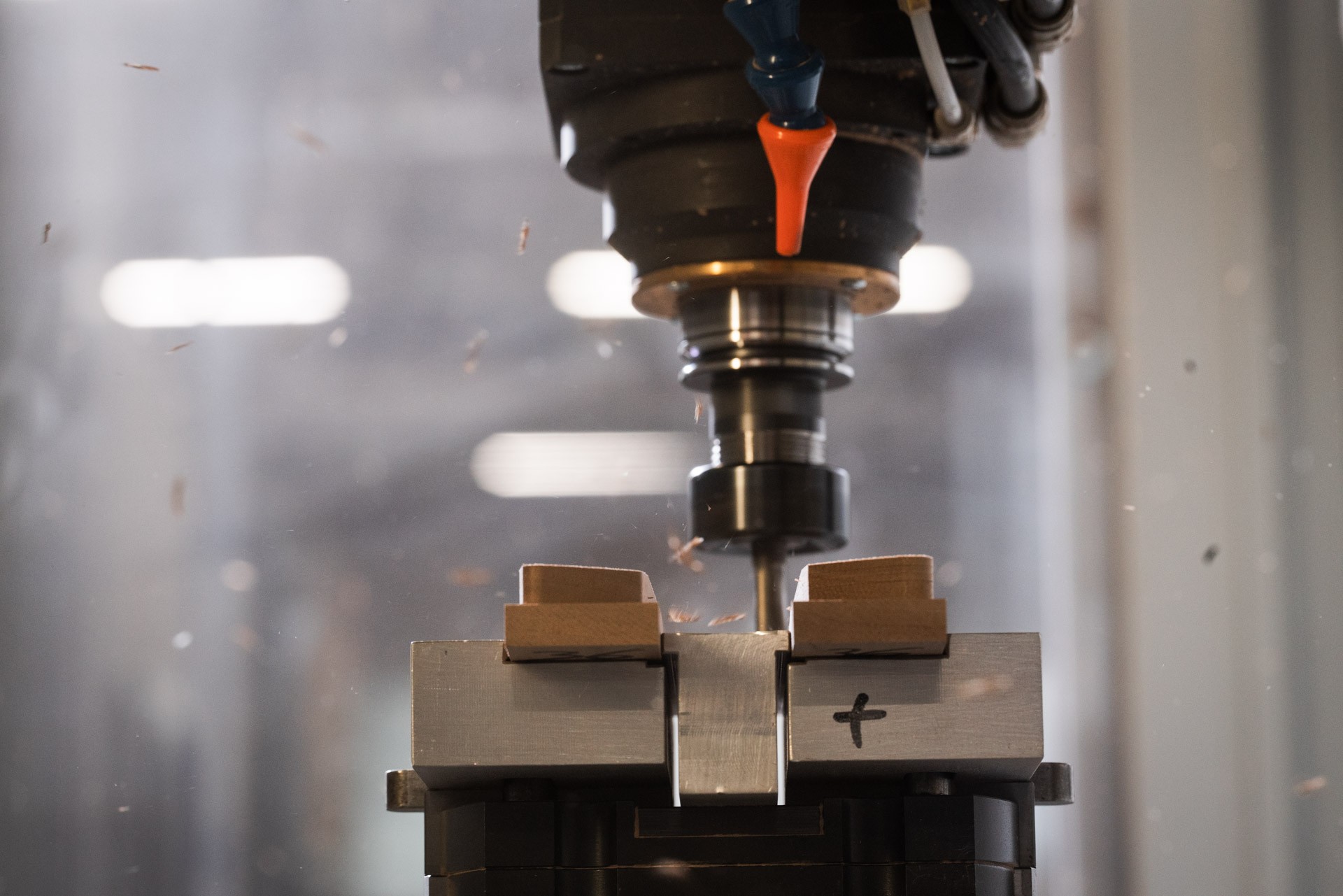
Wood machines well. Our CNC machining centres hold ultra-tight tolerances and repeat them from the first piece to the last, which matters for a closure that has to fit a bottle neck every time. Wood also exchanges moisture with the air, so a closure has to be designed for it: where needed, technical inserts are integrated directly into the wood to keep the seal airtight and the formula protected. We explain the behaviour behind it in our article on wood moisture content.
What the material says about the brand
A wooden component signals natural, crafted and premium before the product is even used, and sets it apart from competitors that use standard materials. Responsibly sourced wood also supports a sustainability story, a topic we cover in our article on innovative wood packaging components for sustainability.
Safety and stability in contact with the product
Packaging is part of the safety of a cosmetic product. Under the EU Cosmetics Regulation, the safety report must include the relevant characteristics of the packaging material, in particular purity and stability. For a wooden component, there are three points to check with the supplier: the composition of the wood and of the finish, the stability of the component with your formula and the sealing performance over time. For spirits, our closures are engineered to withstand humidity and high-proof alcohol vapours without aesthetic or structural alteration.
Planning the budget? Costs depend on the whole process and not only on the material: see our article on optimizing production costs for custom cosmetic packaging components.
Evaluating wood for a closure, cap or lid? Talk to our team about your project, or explore our wood packaging components for cosmetics, fragrances and spirits.